Introduction
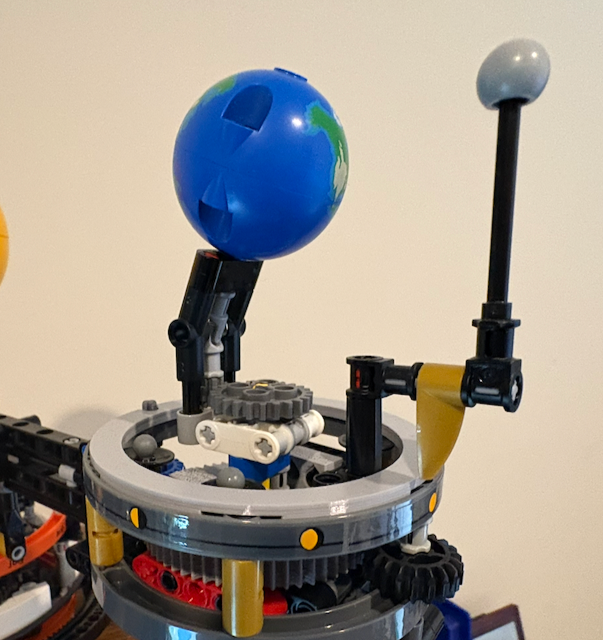
The LEGO Technic Planet Earth and Moon in Orbit Set is a mechanical, educational LEGO set that functions like a small orrery—a working model of the Earth–Moon–Sun system.
The set uses several gears in a clever manner to simulate the relative motions of the earth around the sun and the moon around the earth. As the moon orbits the earth a pointer indicates the phase of the moon from a new moon, to a full moon, and back to a new moon.
In his excellent article, Falling Down The Gravity Well: Orbits of the LEGO Orrery, Joseph Shoer describes the set in detail. He includes an analysis of the various gear ratios that tie the orbital motions together.
Of particular interest is the finding that the lunar orbital period is geared to be 27 days. The author states that this is close to the actual value of 27.3 days.
Tale of Two Lunar Orbital Periods
There are two ways to define a lunar month:
- The Sidereal month (~27.3 days) is defined as the time it takes the Moon to complete one full orbit relative to the distant stars (i.e., return to the same position in space).
- The Synodic month (~29.5 days) is defined as the time between New Moons. During the Moon’s orbit, Earth is also moving around the Sun, so the Moon must travel a bit farther than one full orbit to line up with the Sun again for the same phase. That extra “catch-up” time is what stretches 27.3 days to about 29.5 days.
Since the model shows the phases of the moon, it should have used the synodic lunar month of 29.5 days instead of the sidereal month to design the gear ratios that drive the orbit of the moon mechanism.
As it stands, the indicated moon phase quickly drifts from reality as we move through the year.
This article describes a modification that changes the lunar gear ratio to the synodic lunar month. Serendipitously, a change to a single gear results in a very accurate lunar month.
The Math
Current Lego lunar month	                      27	days
Actual lunar (synodic) month	       29.531	days

There is an additional complication in determining the needed gear ratio.  The arm supporting the Earth and lunar platform moves during the lunar month as the Earth orbits the sun.  This reduces the apparent rotation of the gear driving the lunar platform.  It will take more rotation of that gear to complete one rotation of the lunar platform. (New moon to new moon.)

LEGO days in a year	                        364.5
% year in a synodic month	                8.10%	= 29.531 / 364.5

This is the amount of rotation that is lost in one lunar month.  There is a gear ratio between the driving gear and. the lunar platform.  It is currently 60:20 (3 to 1).  But we cannot use that ratio because we propose to change the platform gear from 60 teeth to 64 teeth.

Number of teeth on driving gear	     20
Number of teeth on platform gear	     64	Proposed

The amount of needed correction is reduced by the ratio of the platform gear to the driving gear.

% change in lunar month	                2.53%	= 8.10% * 20 / 64

Since we will be ““losing”” rotation, the platform rotation target needs to be reduced.

Adjusted platform month	                  28.78	= 29.531 decreased by 2.53%

Original number of teeth	                     60
New number of teeth	                             64
New platform lunar month	                28.80	= 27 * 64 / 60, very close to the target of 28.78
New LEGO lunar month	              29.529	= 28.80 increased by 2.53%

The new lunar month is only 0.007% shorter than the actual value!
Implementation
This section describes how to make the necessary changes to the model to correct the duration of the lunar month.
Overview
The moon is attached to the moon turntable.
This mod involves replacing the original 60-tooth turntable
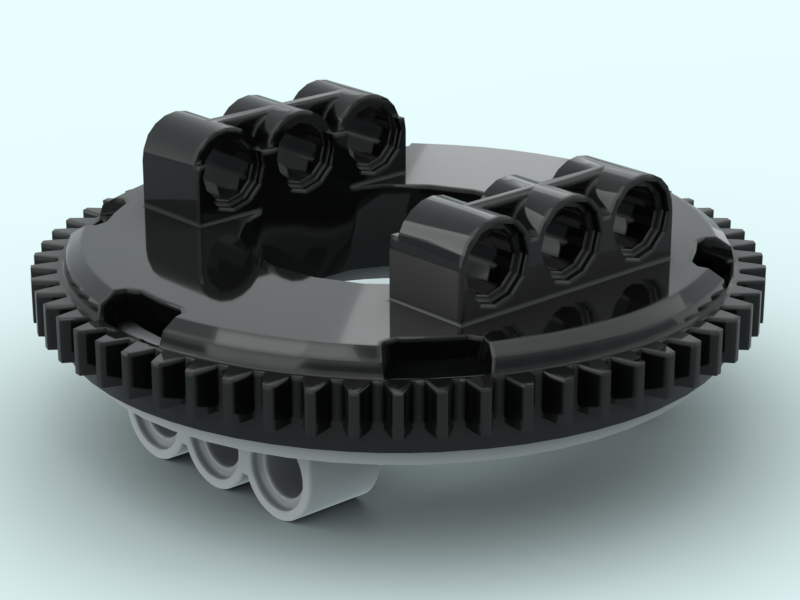
with a 64-tooth version.
Notes
Designing the Gear
Increasing the number of teeth on the turntable gear from 60 to 64 makes the teeth smaller. My first try resulted in a gear that did not mesh well with the existing gears in the model. I resolved this by increasing the backlash in the gear design. This made the teeth narrower so that the wider teeth of the existing gears could fit into the now wider gaps of this gear.
Moon Phase
The winter equinox corresponds to when the Earth pointer is directly over the motor axel.
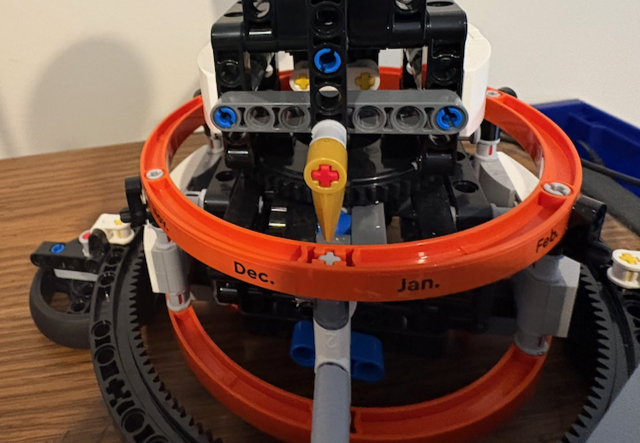
The phase of the Moon at the time of the winter equinox change from year to year. The original model locks the Moon phase to one unchangeable position.
This position is set when the model is built. The build instructions have the upper turntable rotated so that Moon is in directly inline between the Sun and the Earth, representing a new moon.

The original turntable consists of two parts (upper and lower) that lock together. They cannot be separated once they are snapped together,
In this design, I have eliminated the snaps that locked the two parts together. In the completed model, this allows the upper turntable (with the Moon on it) to be lifted up and disengaged from its associated gears. The turntable can then be rotated and dropped back down to set the winter equinox moon position for a particular year.
The Files
There are four STL files:
- Upper Turntable.stl
- Lower Turntable.stl
- Connecter.stl
- Cover.stl
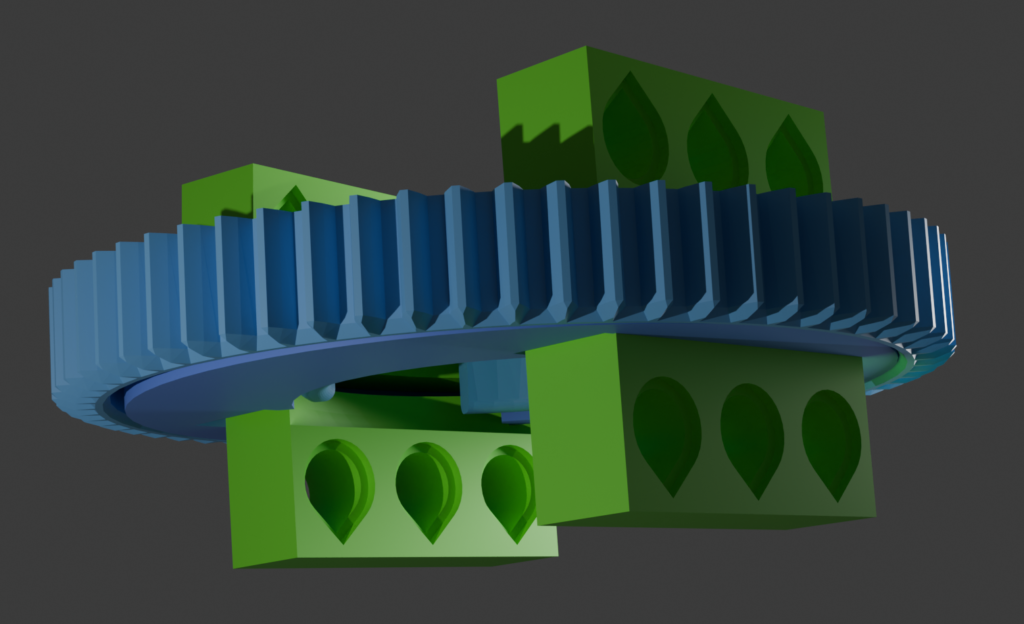
You will need to 3D print four copies of the Connector.
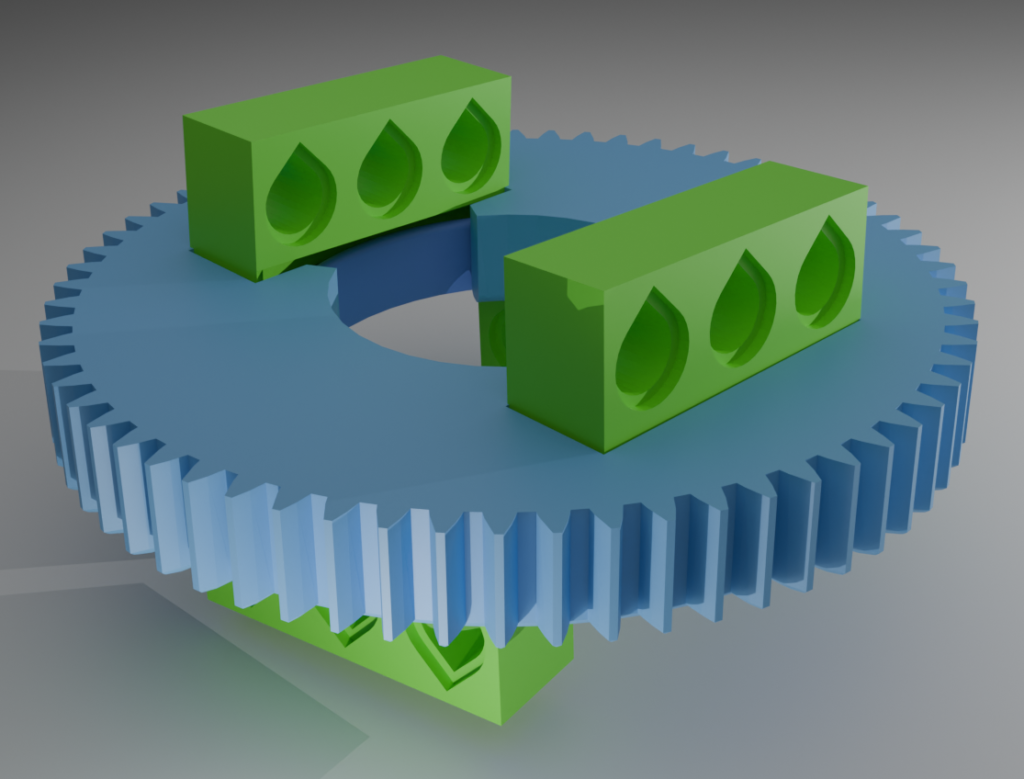
Note: The mounting holes in the Connector have a teardrop shape instead the standard circle. This allows the part to be 3D printed without internal temporary supports. This shape still functions properly.
The Connector will require some supports down to the build plate. The remaining parts do not need any supports.
Platform Assembly
Insert the two connector blocks into the platform gear from the bottom side.
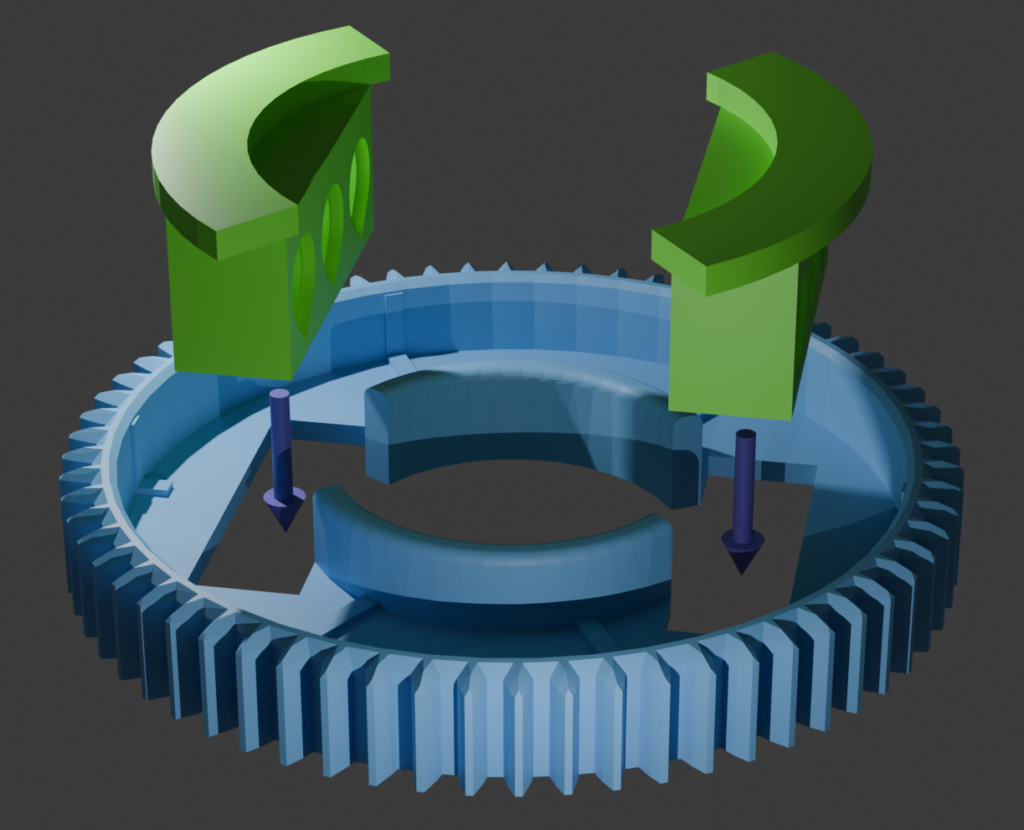
The connectors should be seated all the way down. The fit is quite tight. No glue is needed. When the moon structure is rebuilt on this platform, it will lock the connector blocks into place.
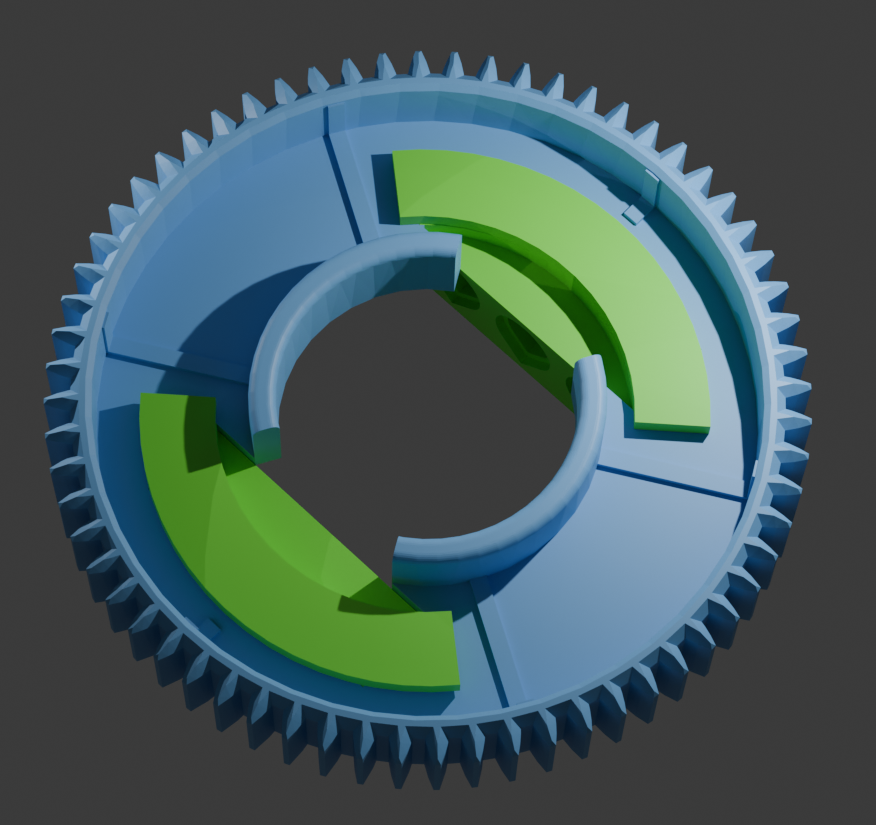
Finished upper turntable assembly.
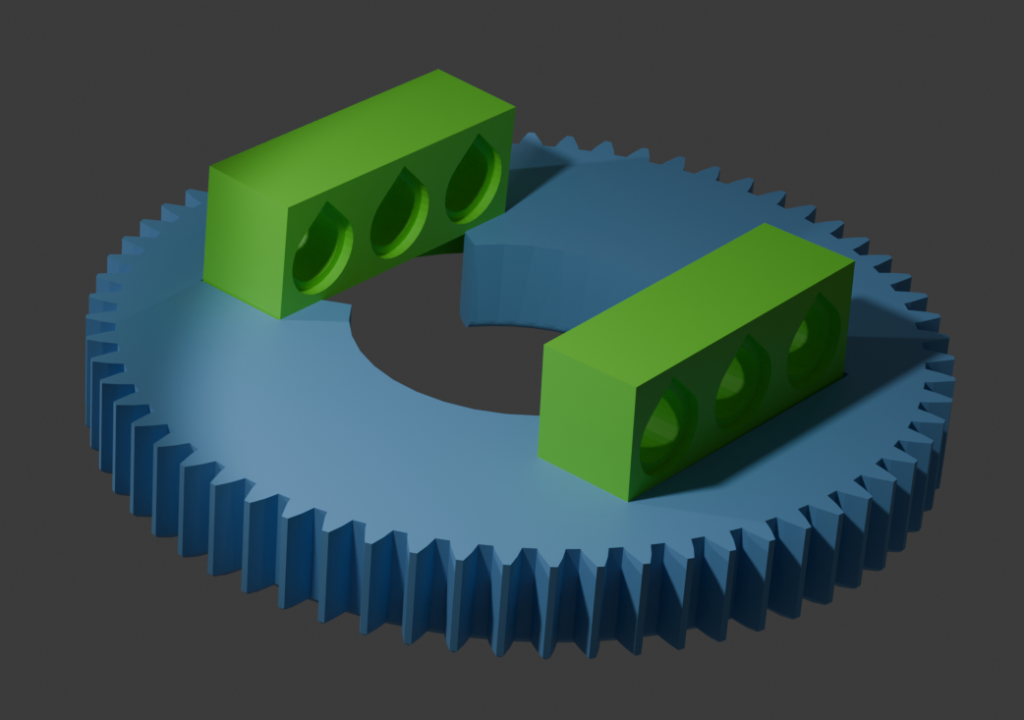
Assemble the lower turntable in a like manner.
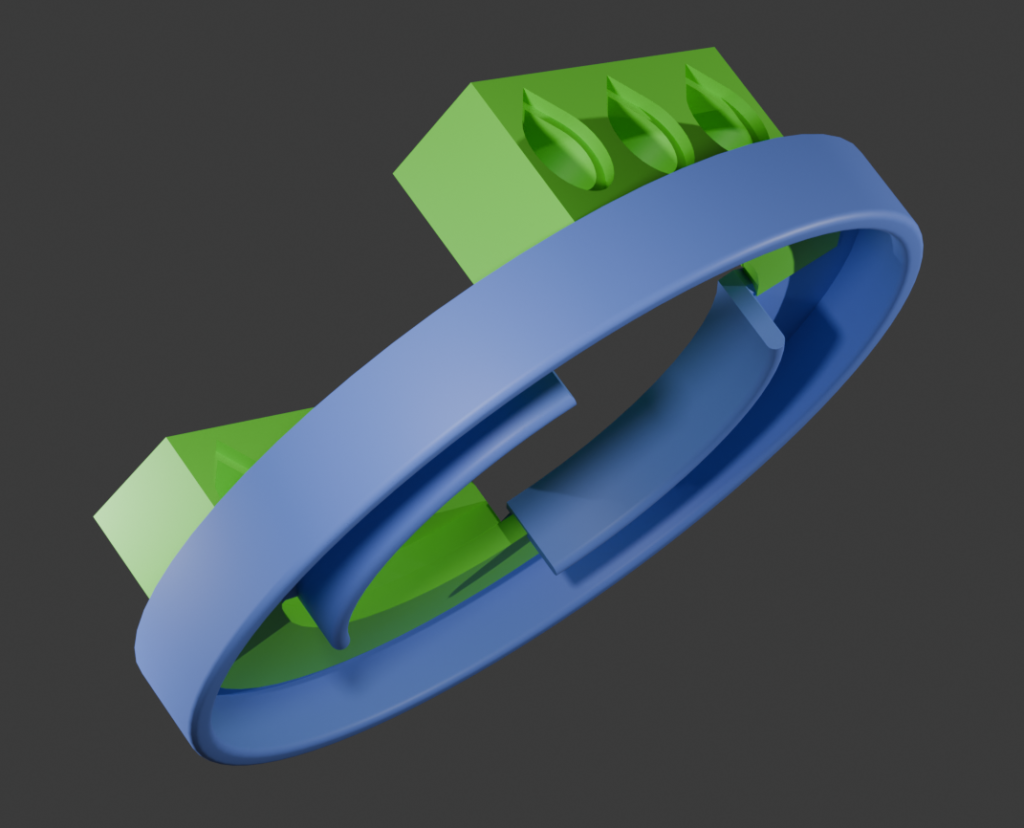
Completed turntable
The Cover
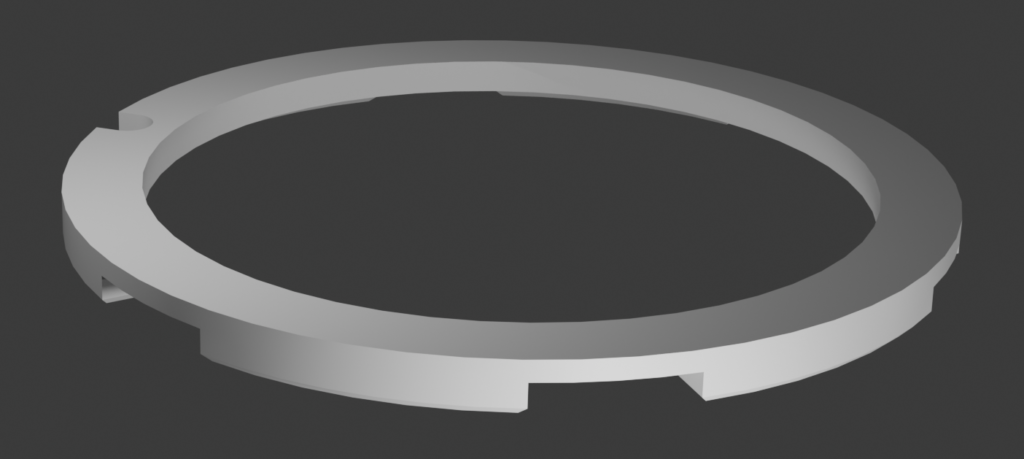
In the original design with the standard LEGO parts, the two turntables are locked together . The two halves of the new turntable assembly are not locked together. This is so that the upper turntable can be lifted up and rotated to a new position that matches the correct phase of the moon.
In practice, gravity will keep the upper turntable down and engaged with the related gears. The cover is an optional part that ensures that the upper turntable stays in the proper position.